
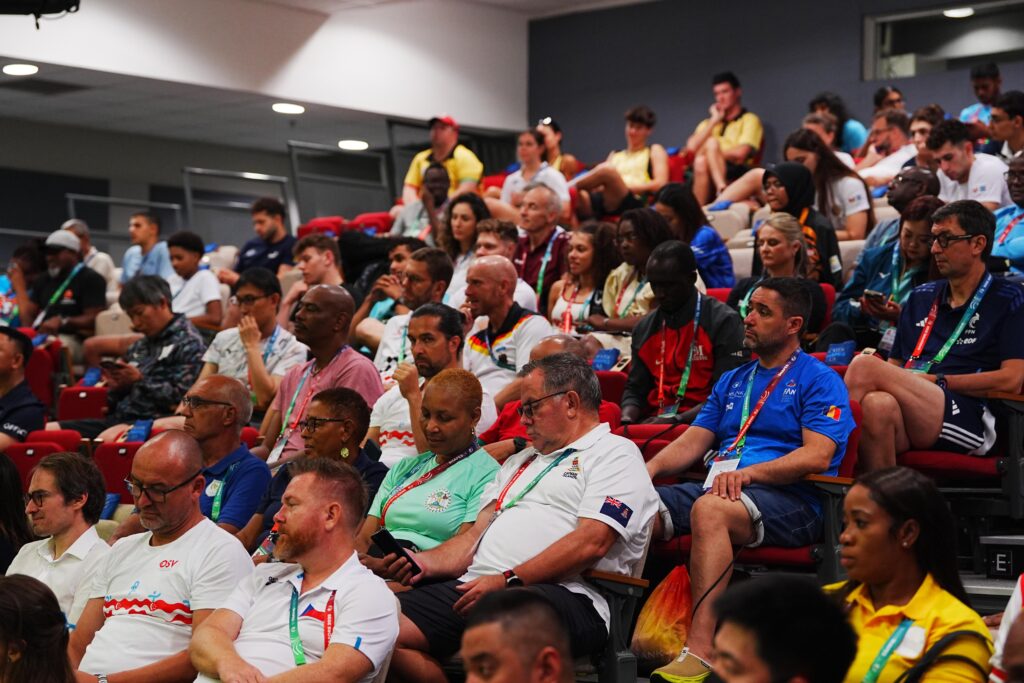
The Aquatics Integrity Unit (AQIU) successfully hosted an Anti-Doping Conference on-site at the World Aquatics Championships in Singapore on 25 July, bringing together over 200 participants from across the global aquatics family. The event marked a key moment in promoting integrity, transparency and athlete safety in aquatic sports.
The AQIU was established in 2023 and handles all integrity-related matters in aquatics, including ethical breaches, harassment and abuse, betting-related issues, result manipulation and anti-doping (in partnership with the International Testing Agency).
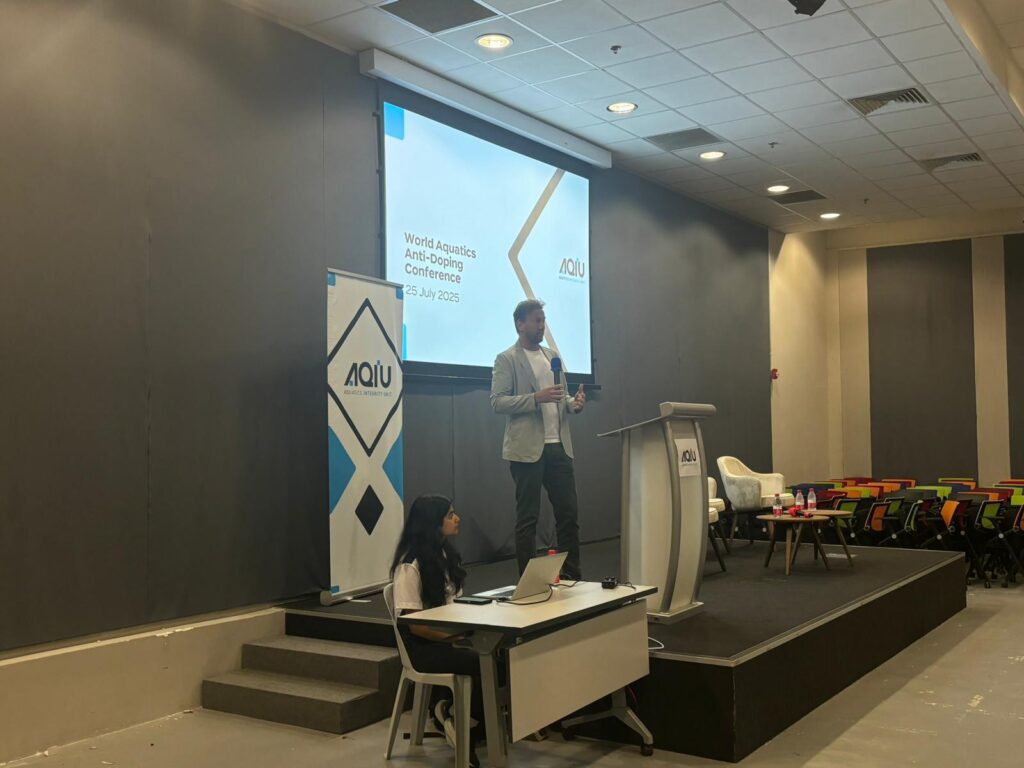
Brent Nowicki, Executive Director of World Aquatics, opened the conference by emphasising the importance of ethical leadership and athlete protection. He emphasised that the AQIU exists so that every athlete, official, stakeholders and fan knows that aquatics is governed by fairness and accountability. He also thanked the International Testing Agency (ITA) for implementing the World Aquatics Anti-Doping program expertly and independently.
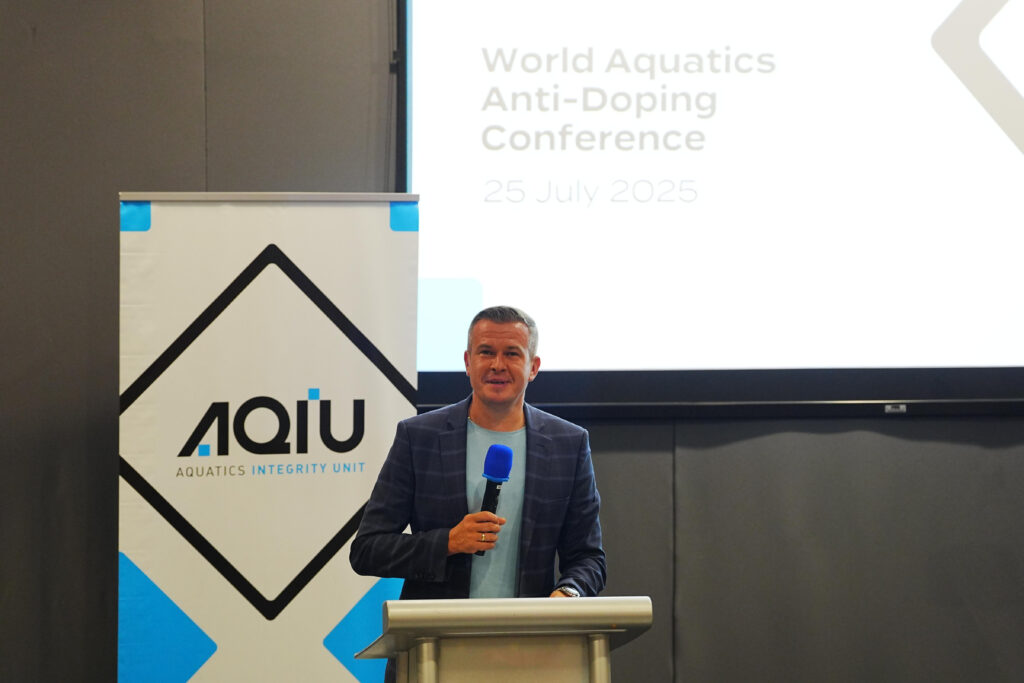
In another compelling keynote, Witold Bańka, President of the World Anti-Doping Agency (WADA), praised the global harmonisation achieved through the World Anti-Doping Code; a legal framework embraced by over 200 countries and nearly every sporting discipline.
“You won’t find a similar legal system anywhere in the world that unites so many countries under one standard,” said Bańka. “The Code is a living document, constantly evolving to ensure the rules remain fit for purpose.”
Drawing on his experience as a former athlete, Bańka spoke directly to the challenges athletes face in understanding anti-doping procedures: “It’s not an easy business, but it’s vital to be aware of the rules to protect your careers and avoid costly mistakes. Be fair. Be responsible. Be clean. You’re not just doing it for yourself, but for your nation, your family, and the young athletes watching you.”
The panellists included Ross Wenzel, General Counsel of WADA, and Paul Greene, a leading international athletes’ lawyer and founder of Global Sports Advocates.
The session explored two real-world anti-doping case studies, not instances of deliberate doping, but examples where mistakes and lack of vigilance led to serious consequences. As the panellists noted, “In most doping cases, the problem isn’t cheating, it’s that people didn’t do what they were supposed to do.”
The panel reinforced four key messages:
- Be responsible
- Be vigilant
- Declare everything
- Keep thorough records
With growing global cooperation, expert leadership and continued education, the future of clean sport in aquatics remains strong.
In addition to the conference, the AQIU also hosted a media tour of anti-doping measures during the World Aquatics Championships – Singapore, in partnership with the International Testing Agency (ITA). This initiative provided media representatives with a behind-the-scenes look at the rigorous procedures in place to ensure safe and fair competition. The tour included; a showcase of the layout and function of a doping control station, a step-by-step walkthrough of a doping control procedure and a simulated doping control process with a Doping Control Officer and an athlete.
Journalists also had the opportunity to ask questions and gain deeper insight into the protocols and safeguards that uphold integrity in aquatics.